
Amazon Associate Disclosure: This post contains affiliate links. As an Amazon Associate, I earn from qualifying purchases at no additional cost to you.
Why You Don’t Need to Spend $2,000 for Great Espresso
The espresso machine market has changed dramatically. Just five years ago, getting café-quality shots at home meant spending upwards of $1,500. Today, machines under $500 deliver performance that would have cost twice as much in the past.
We have tested dozens of espresso machines in this price range, and the quality available now is remarkable. Whether you’re upgrading from a basic drip coffee maker or replacing an aging machine, you can get excellent espresso without emptying your wallet.
This guide focuses on machines that deliver consistent shots, proper temperature control, and real steam pressure for milk frothing. No cheap plastic machines that break after six months. These are the real deal.
Quick Comparison: Top 5 Espresso Machines Under $500
| Machine | Price | Best For | Key Feature |
|---|---|---|---|
| Breville Bambino Plus | ~$500 | Best Overall | Auto milk frother |
| Gaggia Classic Pro | ~$450 | Best Value | Commercial components |
| DeLonghi Dedica | ~$250 | Best Compact | Slim 6-inch width |
| Breville Bambino | ~$300 | Best Budget | Fast heat-up |
| Mr. Coffee Espresso | ~$150 | Best Entry-Level | One-touch operation |
1. Breville Bambino Plus: Best Overall Espresso Machine Under $500
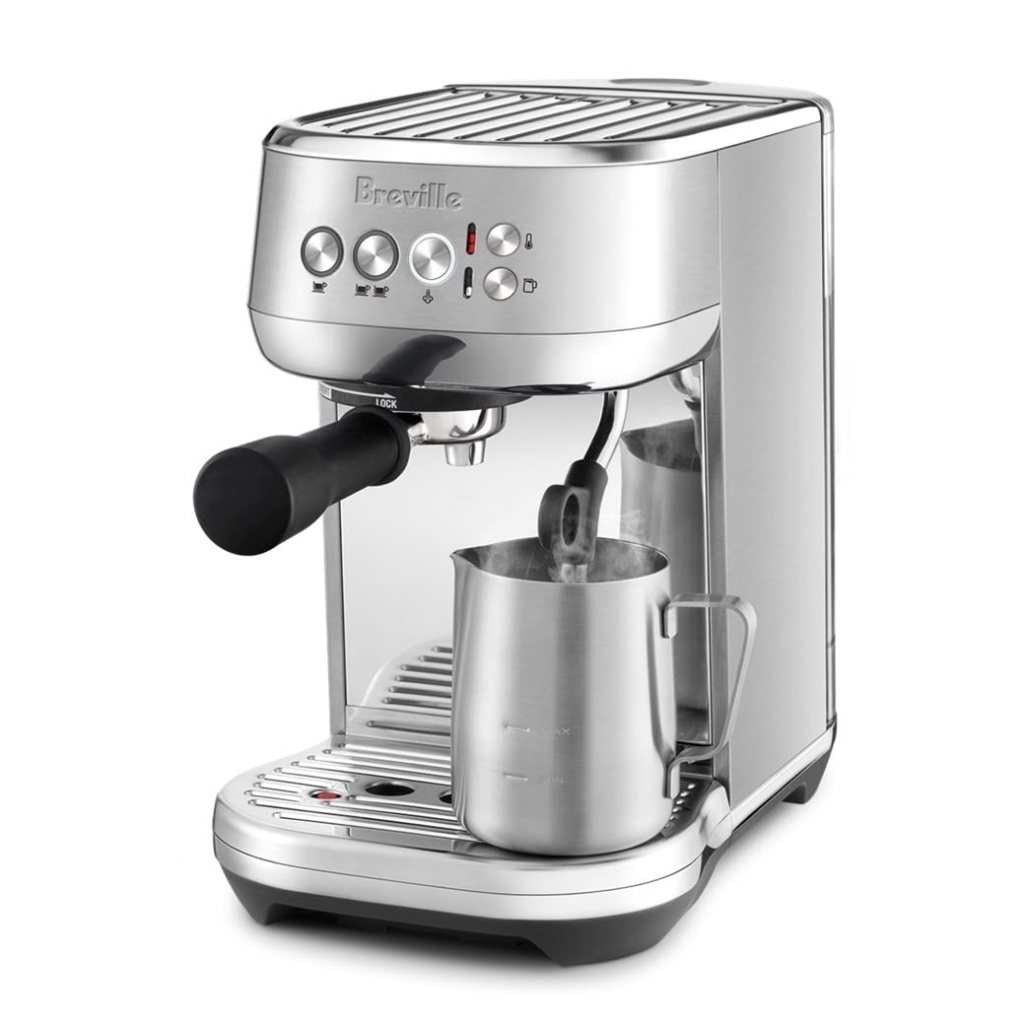
Price: Around $500
The Breville Bambino Plus sits at the top of the under-$500 category for good reason. It’s the machine I recommend most often because it balances performance, ease of use, and consistency better than anything else in this price range.
What Makes It Special
The automatic milk frother is the standout feature. Unlike manual steam wands that require practice and technique, the Bambino Plus creates microfoam at the touch of a button. It’s not just convenient—it’s actually good. The texture rivals what you’d get from a skilled barista.
The ThermoJet heating system reaches extraction temperature in just 3 seconds. For comparison, most machines in this range take 30-45 seconds. This isn’t just about convenience—fast heating means more stable temperature, which directly affects shot quality.
Pressure sits consistently at 15 bars, which is exactly where you want it for proper extraction. The 54mm portafilter is slightly smaller than commercial standard (58mm) but large enough to avoid channeling issues that plague smaller machines.
Who This Is For
- Anyone who drinks milk-based espresso drinks daily
- People who want consistency without a learning curve
- Home baristas upgrading from entry-level machines
- Households where multiple people make different drinks
Who Should Skip This
- Purists who want full manual control
- People who only drink straight espresso (the standard Bambino saves $200)
- Those needing to make more than 2-3 drinks at once
Key Specs
- Heat-up time: 3 seconds
- Portafilter: 54mm
- Water tank: 64 oz
- Dimensions: 7.7 x 12.5 x 12.2 inches
- Warranty: 1 year limited
2. Gaggia Classic Pro: Best Value Espresso Machine
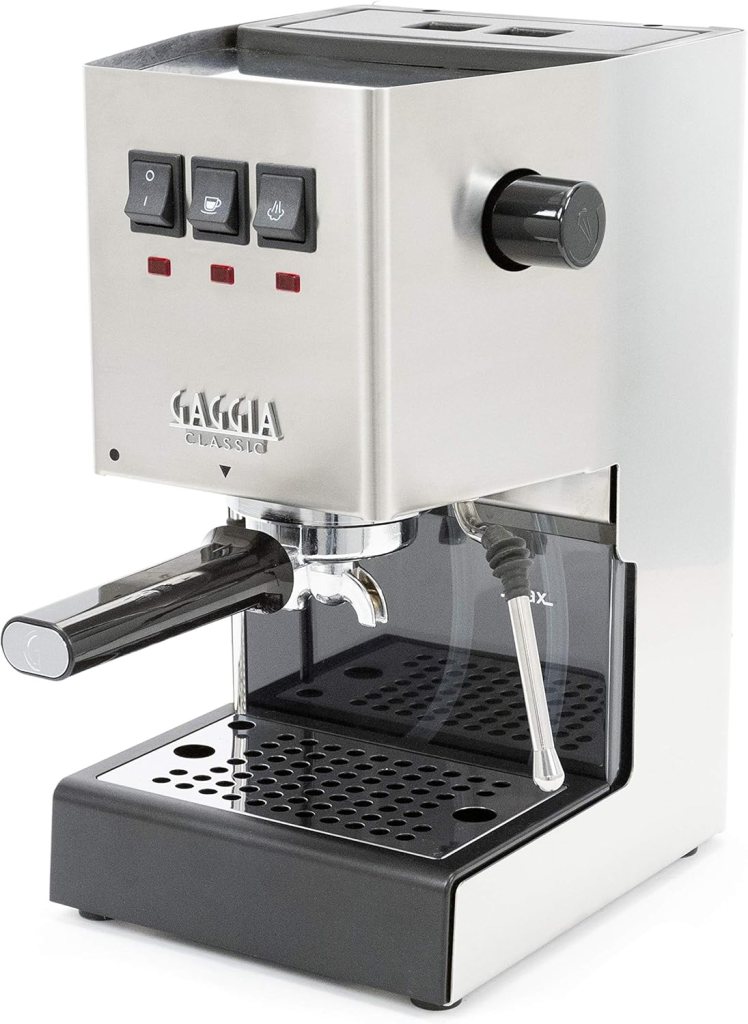
Price: Around $450
The Gaggia Classic Pro is legendary in the home espresso community. It’s been around for decades because it uses commercial-grade components that last. This isn’t a consumer appliance—it’s a semi-commercial machine adapted for home use.
Why Coffee Enthusiasts Love It
The 58mm commercial portafilter is the same size used in coffee shops. This means better extraction, easier tamping, and compatibility with commercial accessories. The brass boiler holds temperature exceptionally well, delivering shot after shot with minimal temperature fluctuation.
The solenoid valve is something you rarely see under $500. It releases pressure immediately after extraction, creating dry pucks that are easy to knock out. More importantly, it prevents over-extraction that can turn shots bitter.
But here’s what really sets the Classic Pro apart: it’s endlessly moddable. The home espresso community has created dozens of modifications—PID temperature controllers, flow control paddles, pressure gauges. You can start basic and gradually upgrade as your skills develop.
The Learning Curve
This machine requires more skill than the Bambino Plus. Temperature surfing is necessary—you’ll need to learn the flush technique to hit optimal extraction temperature. The steam wand is manual, so milk frothing takes practice.
For some people, this is a drawback. For others, it’s the appeal. You’re learning actual espresso-making skills, not just pushing buttons.
Who This Is For
- Coffee enthusiasts who want to develop barista skills
- People who plan to keep the machine for 10+ years
- Those interested in modifications and upgrades
- Buyers prioritizing repairability and longevity
3. DeLonghi Dedica: Best Compact Espresso Machine
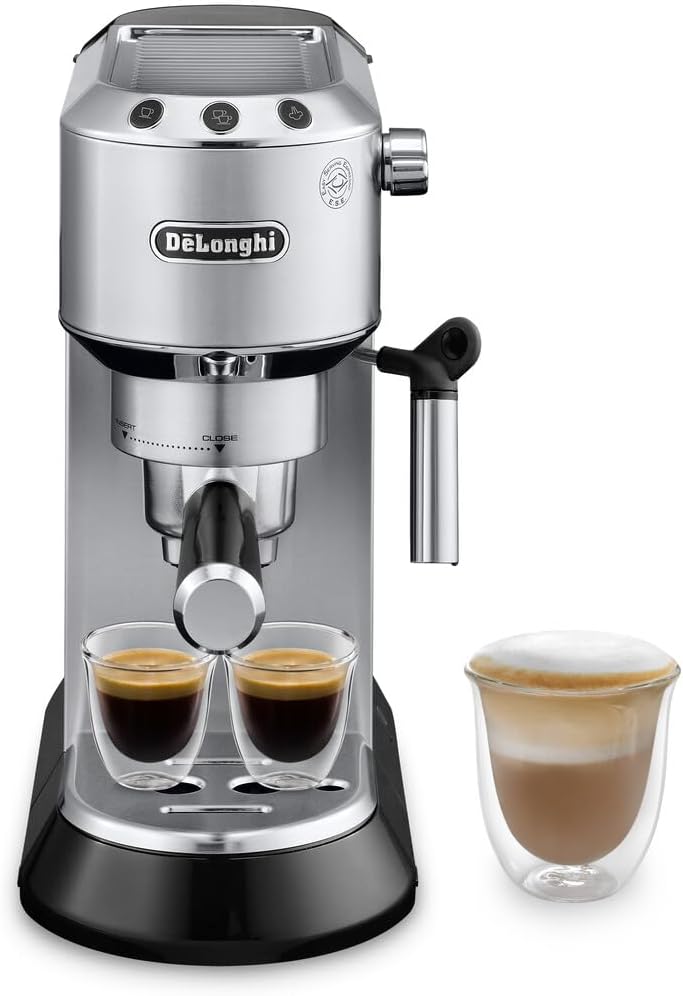
Price: Around $250
At just 6 inches wide, the Dedica fits where other espresso machines can’t. But don’t mistake its slim profile for compromised performance. This machine delivers genuinely good espresso in a footprint smaller than most toasters.
Space-Saving Design
The vertical design concentrates all components into a narrow tower. The water tank sits in the back, the boiler is compact, and the drip tray is minimal. Everything is optimized for small countertops without sacrificing actual functionality.
Despite the size, the portafilter is a respectable 51mm—larger than many budget machines. The boiler heats quickly and maintains reasonable temperature stability. The steam wand produces decent microfoam, though it takes longer than larger machines.
Performance Compromises
The small boiler means you’ll wait between espresso and steaming. This is fine for one or two drinks but frustrating if you’re making multiple lattes. Temperature consistency isn’t quite as tight as the Bambino Plus or Classic Pro.
The pressurized portafilter basket helps beginners pull decent shots but limits what experienced users can achieve. You can buy non-pressurized baskets separately, but extraction quality will always be constrained by the machine’s temperature stability.
Who This Is For
- Apartment dwellers with limited counter space
- People making 1-2 drinks at a time
- Casual espresso drinkers not obsessing over perfection
- Those wanting a capable machine under $400
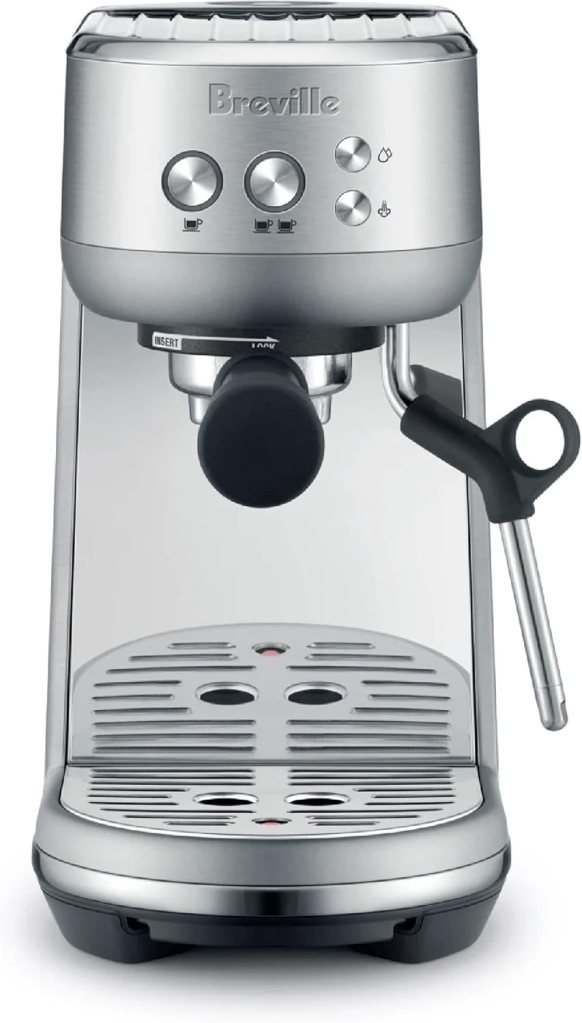
4. Breville Bambino: Best Budget Espresso Machine
Price: Around $300
The standard Bambino is the Bambino Plus without the automatic milk frother. That’s it. Same ThermoJet heating, same 15-bar pressure, same build quality. You’re saving $200 by learning to froth milk manually.
For straight espresso drinkers or people willing to practice with the manual steam wand, this is exceptional value. The machine performs identically to its more expensive sibling in everything except milk preparation.
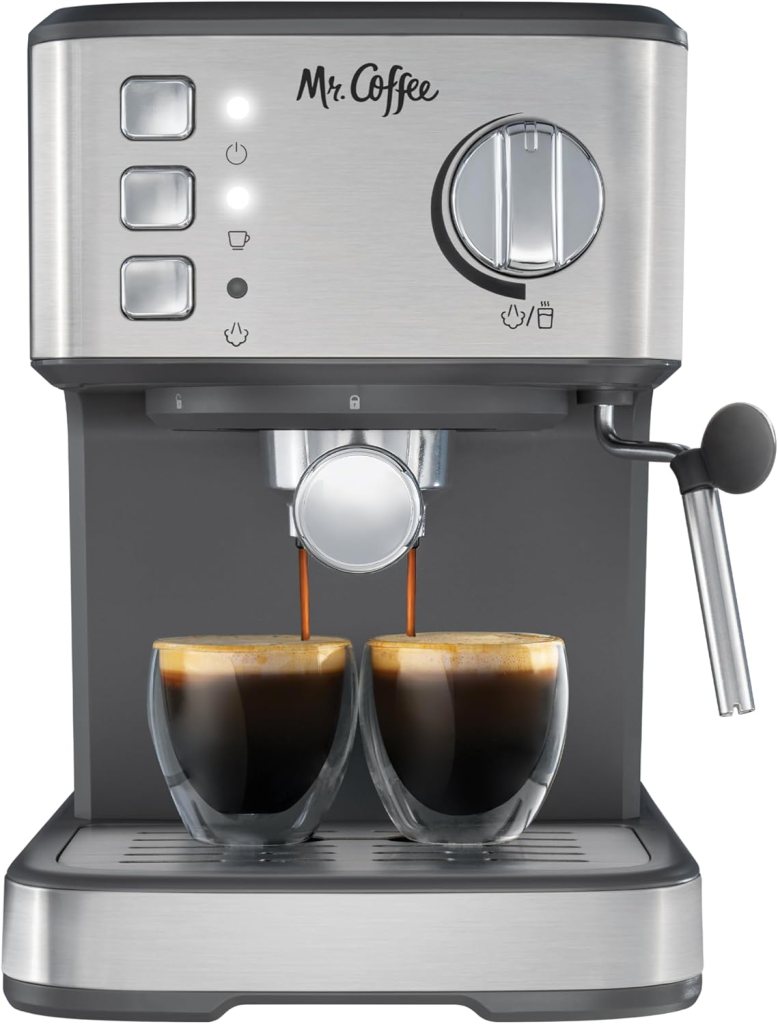
5. Mr. Coffee Espresso and Cappuccino Maker: Best Entry-Level
Price: Around $150
Let’s be honest: this isn’t in the same league as the machines above. But if your budget absolutely caps at $200, the Mr. Coffee produces drinkable espresso-style coffee. It’s not going to satisfy a coffee snob, but it’s leagues better than a Keurig.
The automatic milk frother works reasonably well for cappuccinos and lattes. Build quality is basic—expect plastic components and a shorter lifespan. But for someone testing whether they’ll actually use an espresso machine, it’s a low-risk entry point.
What to Consider When Buying an Espresso Machine Under $500
Portafilter Size Matters
Larger portafilters (54mm and above) allow better coffee distribution and more even extraction. Machines with tiny portafilters often produce inconsistent shots regardless of your technique. Look for at least 51mm if you want reliable results.
Temperature Stability
Espresso extraction happens in a narrow temperature window (195-205°F). Machines with better temperature control produce more consistent shots. Features like PID controllers or ThermoJet heating systems help maintain this stability.
Pressure: Not All 15-Bar Machines Are Equal
Almost every machine claims 15 bars of pressure. What matters is whether that pressure is consistent throughout the extraction and properly distributed across the coffee puck. Cheap pumps start at 15 bars but drop during extraction.
Manual vs. Automatic Milk Frothing
Automatic frothers are convenient but limit your control. Manual steam wands require practice but let you create better microfoam once you develop the skill. Consider how often you’ll make milk drinks and whether consistency or quality matters more.
Build Quality and Longevity
Metal components last longer than plastic. Brass boilers maintain temperature better than aluminum. Commercial-grade portafilters withstand daily use. Pay attention to materials—they directly correlate with how long the machine will last.
Sustainability Matters: Buy Once, Buy Right
Choosing a quality espresso machine isn’t just about better coffee—it’s about reducing waste. A well-built machine like the Gaggia Classic Pro that lasts 10-15 years keeps multiple cheaper machines out of landfills. The Breville Bambino Plus uses efficient ThermoJet heating that consumes less energy than traditional boilers.
When you invest in durable equipment, you’re making a sustainable choice. Repair parts are available for quality machines. The modular design of the Gaggia means you can replace individual components instead of discarding the entire unit. This approach aligns with conscious consumption—buying less frequently but choosing products built to last.
Common Mistakes to Avoid
Buying based solely on price. The cheapest machine often costs more long-term through repairs and replacements. A $450 machine that lasts 10 years beats a $200 machine that breaks after two.
Ignoring the grinder. Your grinder matters as much as your espresso machine. A $500 machine with pre-ground coffee produces worse espresso than a $300 machine with fresh-ground beans. Budget for both.
Expecting cafe quality immediately. Even the best machine requires practice. Your first shots won’t match your local coffee shop. That’s normal. Give yourself time to learn.
Overlooking maintenance requirements. All espresso machines need regular cleaning and descaling. Factor in the time and cost of maintenance products when choosing your machine.
Frequently Asked Questions
Can you really make good espresso for under $500?
Yes, but with caveats. You won’t match a $3,000 commercial machine, but machines like the Bambino Plus and Gaggia Classic Pro produce genuinely excellent espresso. The bigger limitation is usually the grinder, not the machine.
What’s the minimum you should spend?
Around $300 for a machine that will produce consistent results and last several years. Below that, you’re compromising on temperature stability, build quality, or both.
Do I need a separate grinder?
Yes. Machines with built-in grinders under $500 have inadequate grinders. Buy a separate burr grinder—even a $100 hand grinder will outperform any built-in grinder in this price range.
How long do these machines last?
The Gaggia Classic Pro can last 10-15 years with proper maintenance. The Breville machines typically last 5-7 years. Budget machines like the Mr. Coffee might last 2-3 years with regular use.
Can I use pre-ground coffee?
Technically yes, but results will be disappointing. Pre-ground coffee goes stale within days, and you can’t adjust grind size for optimal extraction. A burr grinder is essential for good espresso.
Final Verdict: Which Machine Should You Choose?
For most people: The Breville Bambino Plus offers the best balance of performance, convenience, and consistency. The automatic milk frother removes the biggest learning curve obstacle.
For coffee enthusiasts: The Gaggia Classic Pro provides commercial-grade components, infinite moddability, and a machine that will last a decade or more.
For tight budgets: The standard Breville Bambino delivers 90% of the Bambino Plus performance for $200 less.
For small spaces: The DeLonghi Dedica fits anywhere and produces surprisingly good espresso for its size.
Any of these machines will serve you well if it matches your priorities. The days of needing $1,500 for quality espresso are over. Choose based on your skill level, available space, and how many drinks you make daily.
The most important thing? Start making espresso. Even an imperfect shot pulled at home beats waiting in line at a coffee shop.
Looking for More Sustainable Coffee Products?
At Sustainable Coffee Products, we’re committed to helping you build a home coffee setup that’s both high-quality and environmentally conscious. From reusable filters and eco-friendly cleaning solutions to energy-efficient grinders and sustainably sourced accessories, we curate products that minimize waste while maximizing your coffee experience.
Browse our full collection of sustainable coffee equipment and accessories to complete your home barista setup the right way.

 Sustainable Coffee Products
Leave a reply to Breville Barista Express vs Bambino Plus: Which Should You Buy? – Sustainable Coffee Products Cancel reply